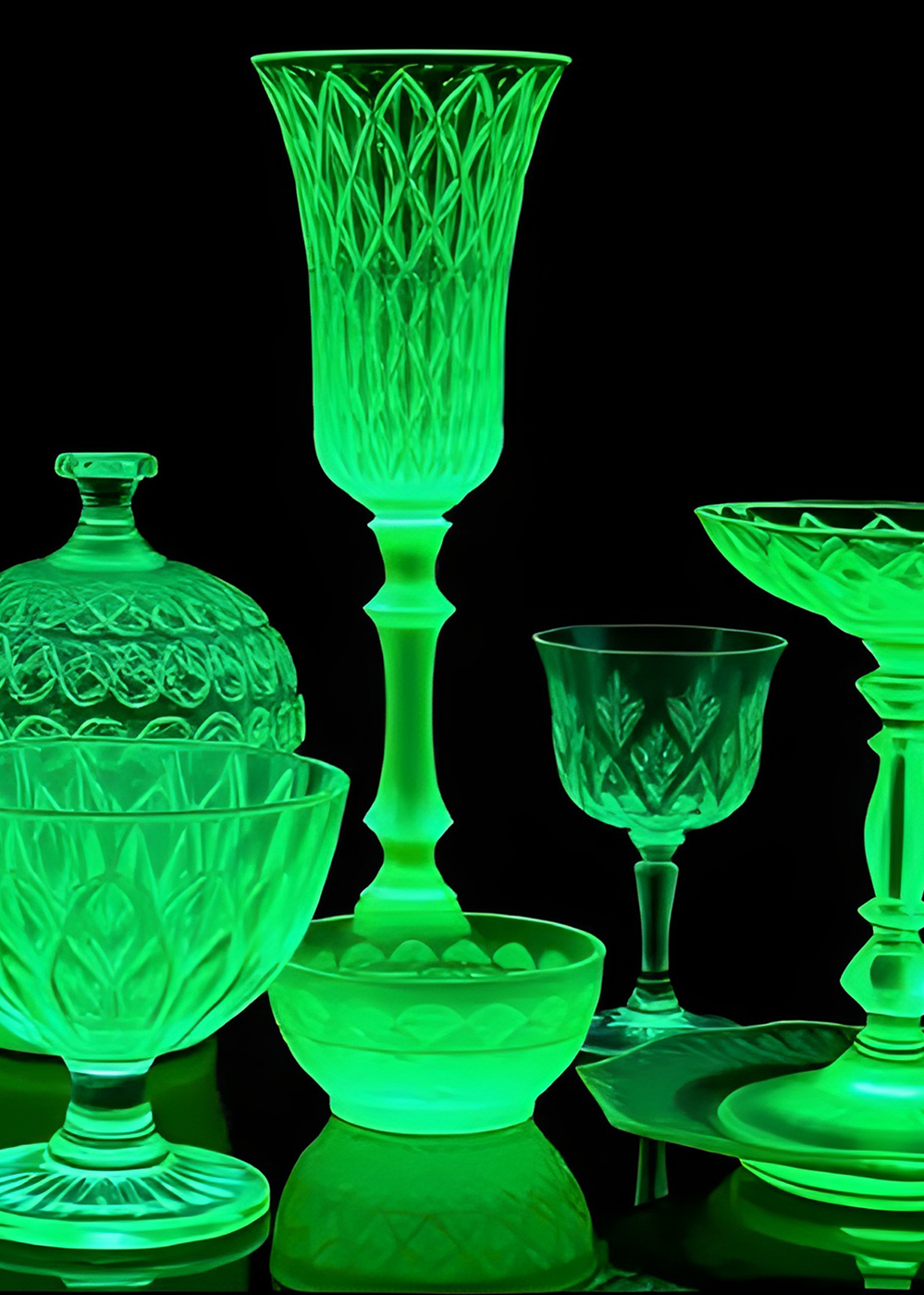
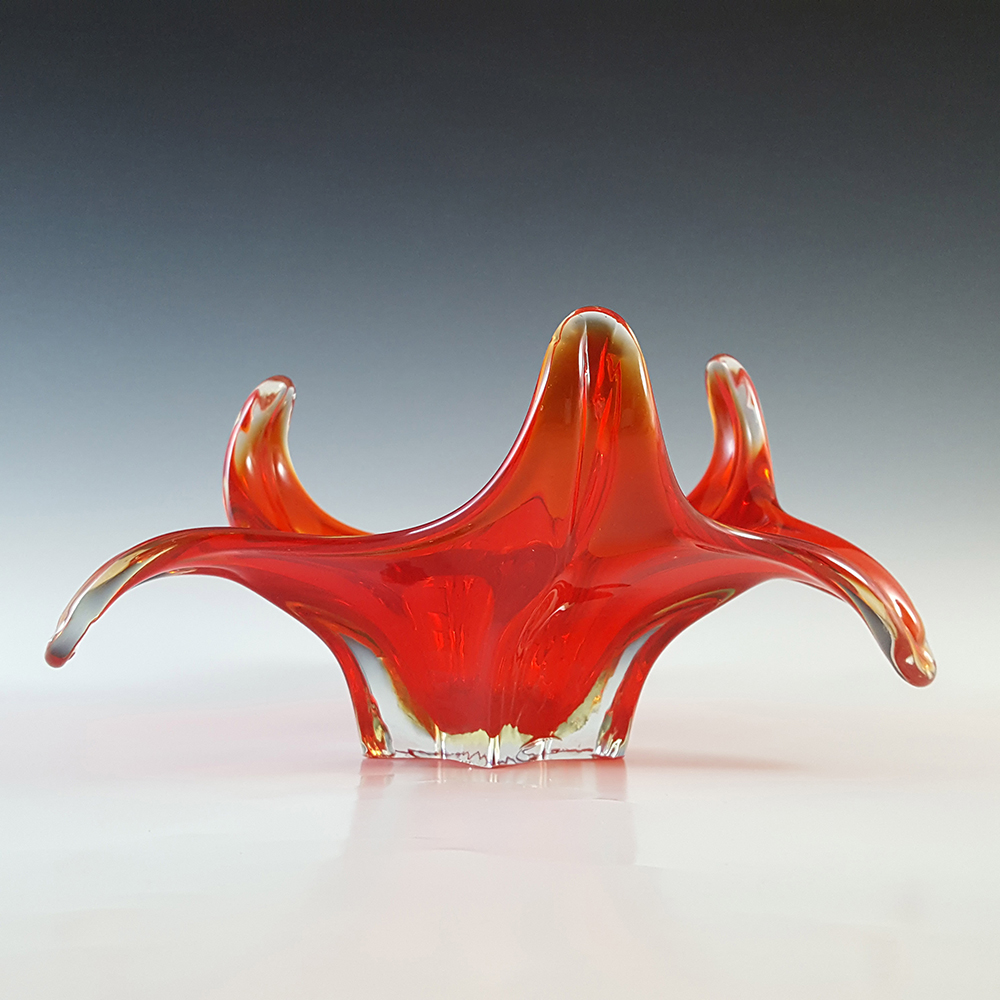
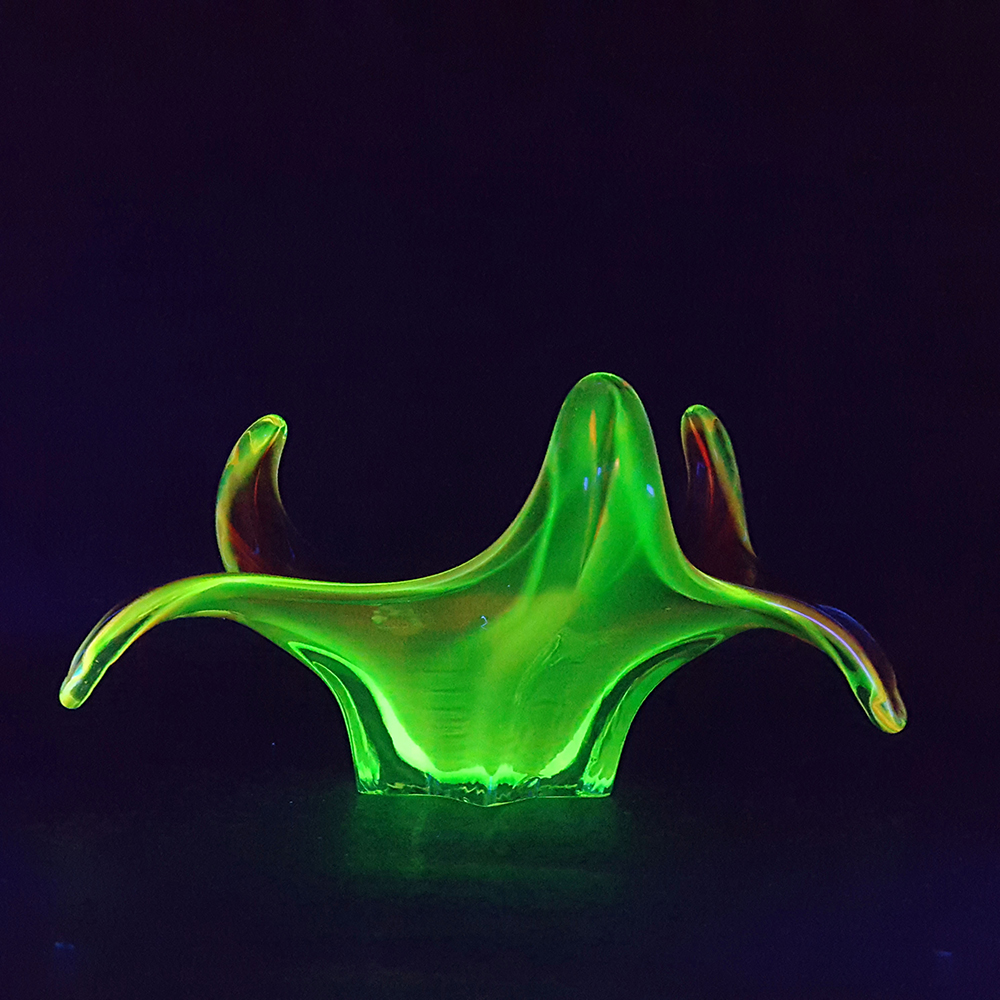
We’re not the first to fall in love with the glowing beauty of uranium glass. Victorian England, with its love for novelty and exoticism, embraced uranium glass as a symbol of the marvels of modern science and progress.
It dates back to 1830, when a Bohemian glassmaker called Josef Reindel began incorporating uranium dioxide into his company’s glass mixtures, producing a glass with a distinctive yellow or green tint. He named the glass after his wife, Anna Maria: the yellow was called Annagelb and the green Annagrun and both types were made at his factory from 1830 to 1848.
Then it was discovered that iron oxide gave a deeper green colour to the glass, which boosted sales, and there were other innovations: Burmese glass, which appears as a pink that transitions into yellow, fluoresces bright green under an ultraviolet light. It was developed by the Mount Washington Glass Company, using a recipe that combined white sand, lead oxide, purified potash, niter, bicarbonate of soda, fluor-spar, feldspar, uranium oxide and colloidal gold. It was the gold that gave Burmese glass its heat sensitivity; the parts that were reheated during manufacture turned the pink colour.
Custard glass, which was developed in the late 1880s by La Belle Glass Company, has an opaque appearance caused by increasing the concentration of uranium oxide; heat sensitive chemicals, including gold, were added to the mix, which, when reheated during the manufacturing process, resulted in a shading effect that ranged from clear yellow to milky white at the edges.
By the late 19th century American glass companies were producing uranium glass that rivalled the production in Europe, right up until the 1940s when uranium was identified as a nuclear energy source and its shining beauty that had been so admired was instead linked to fear and destruction, along with concerns for personal safety thanks to the suggestion that the glass itself was radioactive.
The development of the black light in the early 20th century led to a renewed appreciation of uranium glass. Items that appeared to be quite run of the mill suddenly burst into light when they were shown under ultraviolet rays, glowing with a fluorescent intensity: the brighter the colour, the greater the uranium content. And the best news? A report published by the US Nuclear Regulatory Commission in 2001 stated that uranium glass is considered to be safer than household electronics.
To read more on uranium glass, grab a copy of the Autumn 2026 issue of Antiques to Vintage and get the whole story! (In newsagents from March 3 or subscribe today and have the magazine delivered direct to you).