Bloodletting has been a feature of medicine for thousands of years. The earliest documented record of leeches being used for the purpose dates back to 1500BC Egypt, but it became a widely accepted treatment in the 18th and 19th centuries when apothecary physicians used them to treat everything from headaches and gout to obesity (apparently they were applied to the anus).
The use of leeches became so widespread that they almost became extinct in parts of Europe and an international trade developed. In the late 1800s Australia was exporting its leeches to Europe; at that time, Paris hospitals alone were reported as using an astonishing 5,000,000 leeches per year, no doubt led by the practise of French physician François-Joseph-Victor Broussais who frequently bled patients with 50 leeches at a time and routinely bled every new patient at the military hospital where he worked, irrespective of their condition.
The need to safely store the leeches led to the development of the purpose-built leech jar. Ornate ceramic vessels that would look decorative on the pharmacist’s bench, they were decorated on the outside with gilded swirls and scrolls and drilled with tiny airholes. Inside they were filled with moss, rainwater and pebbles to keep their contents alive, but hungry.
At New England Auctions – Fred Giampietro in the USA, the firm continues to offer select antique leech jars from the collection of the late Dr Jerry Phelps, who was an anaesthesiologist working in Kentucky. Three such jars, with unusual leech-form handles, went way past their estimates when all were sold to a US private collector in May at the firm’s sale of Historical and Medical Antiques.
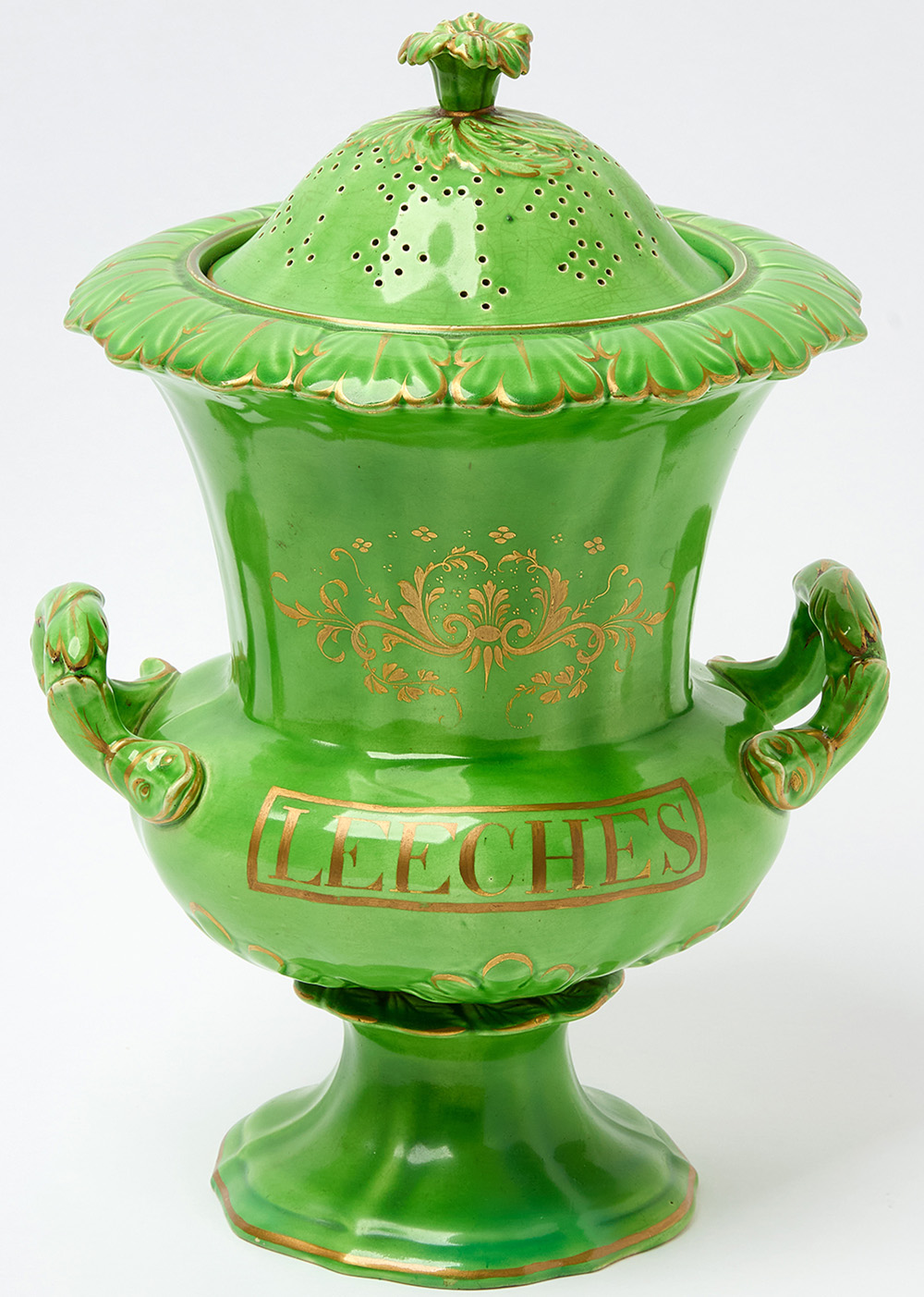
Highest price of $27,369 was for a 19th century earthenware pedestal leech jar with a bright green glaze and hand painted gilt decoration. Estimated to bring around $2000, it was in the manner of early 19th century Staffordshire potter Samuel Alcock.
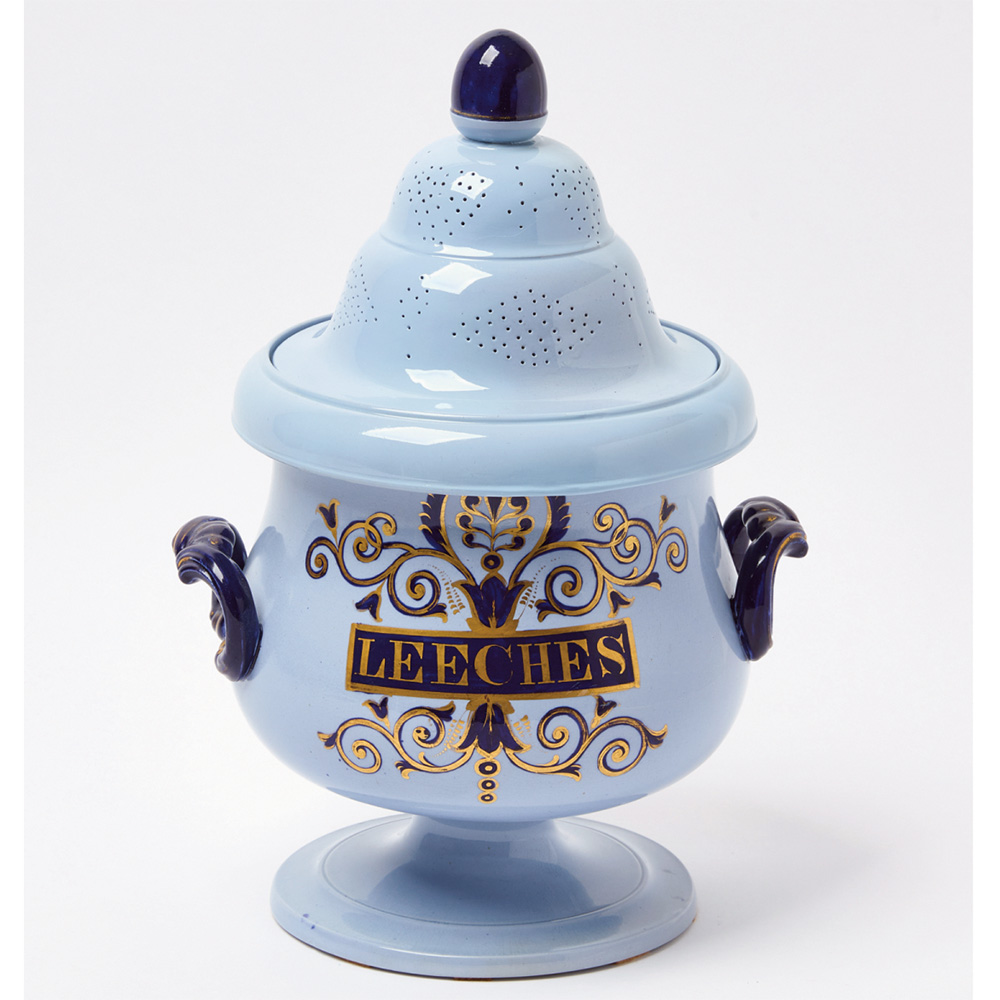
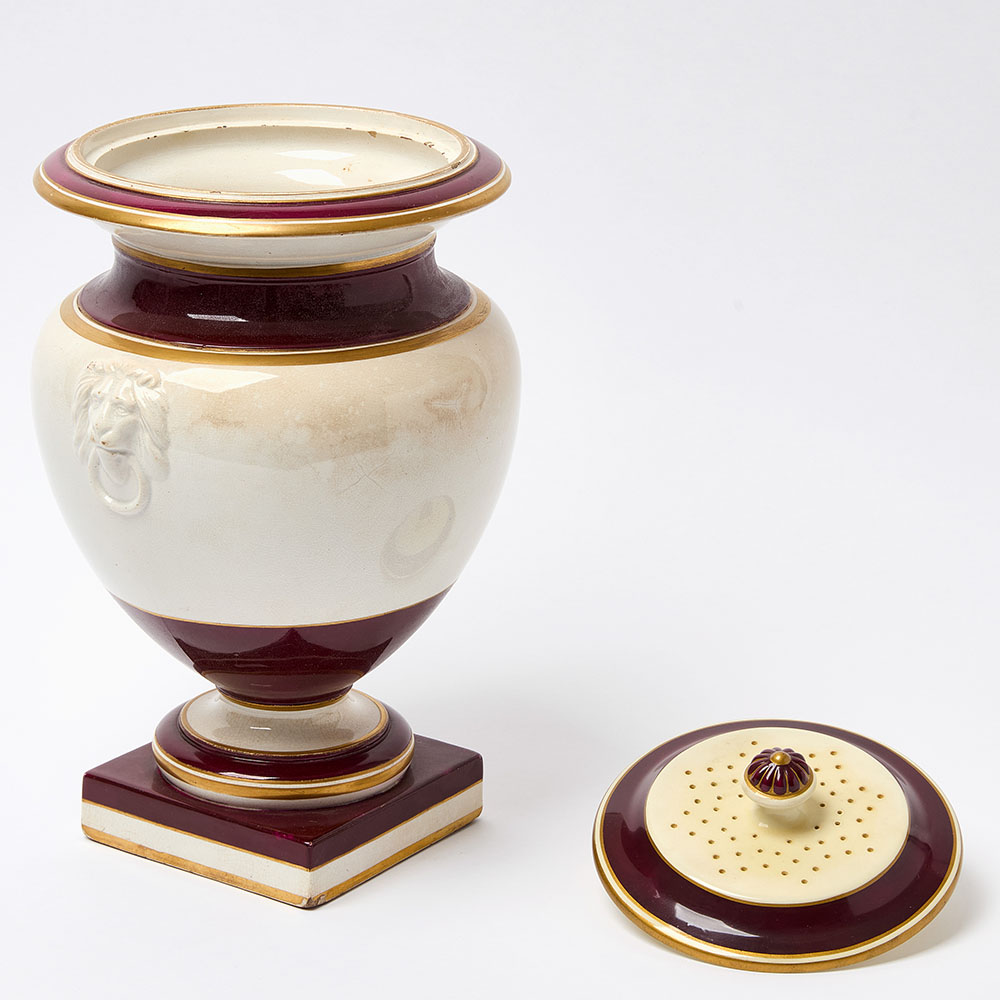
Also selling well above estimate was a pale blue glazed leech jar with gilt lettering and decoration that made $20,167 against expectations of around $1700, and a cream and burgundy glaze pedestal form leech jar with gilt lettering and a cartouche decoration that was also estimated at around $1700 but sold for $14,400 (prices in Australian dollars). Auctioneer Mark Surowiecki said the leech-form handles were a detail that just put the jars “over the top… I did a double-take and thought, Oh, that’s fantastic.”
———
“There is no doubt that the medicinal leech is one of the most beautiful of animals,” wrote British zoologist Arthur Everett Shipley in 1914.