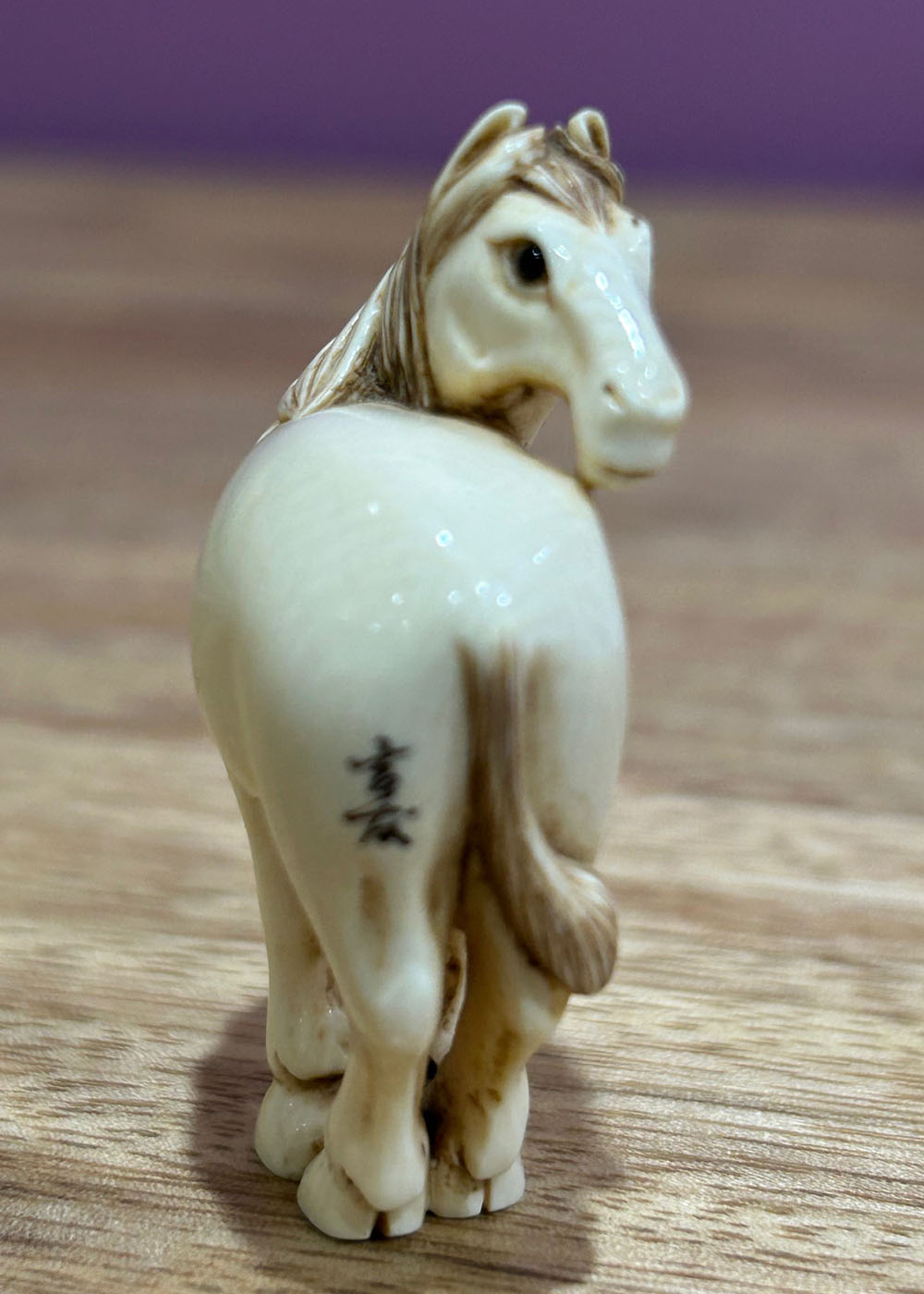
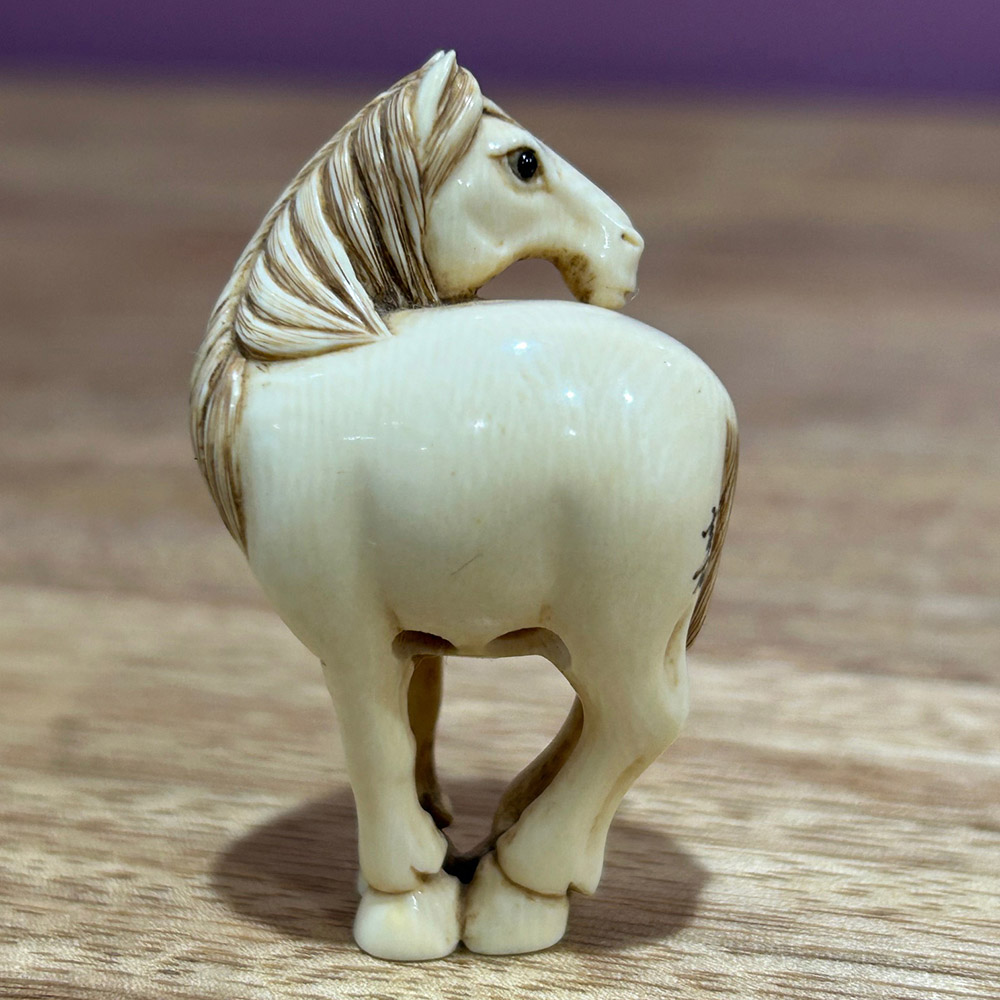
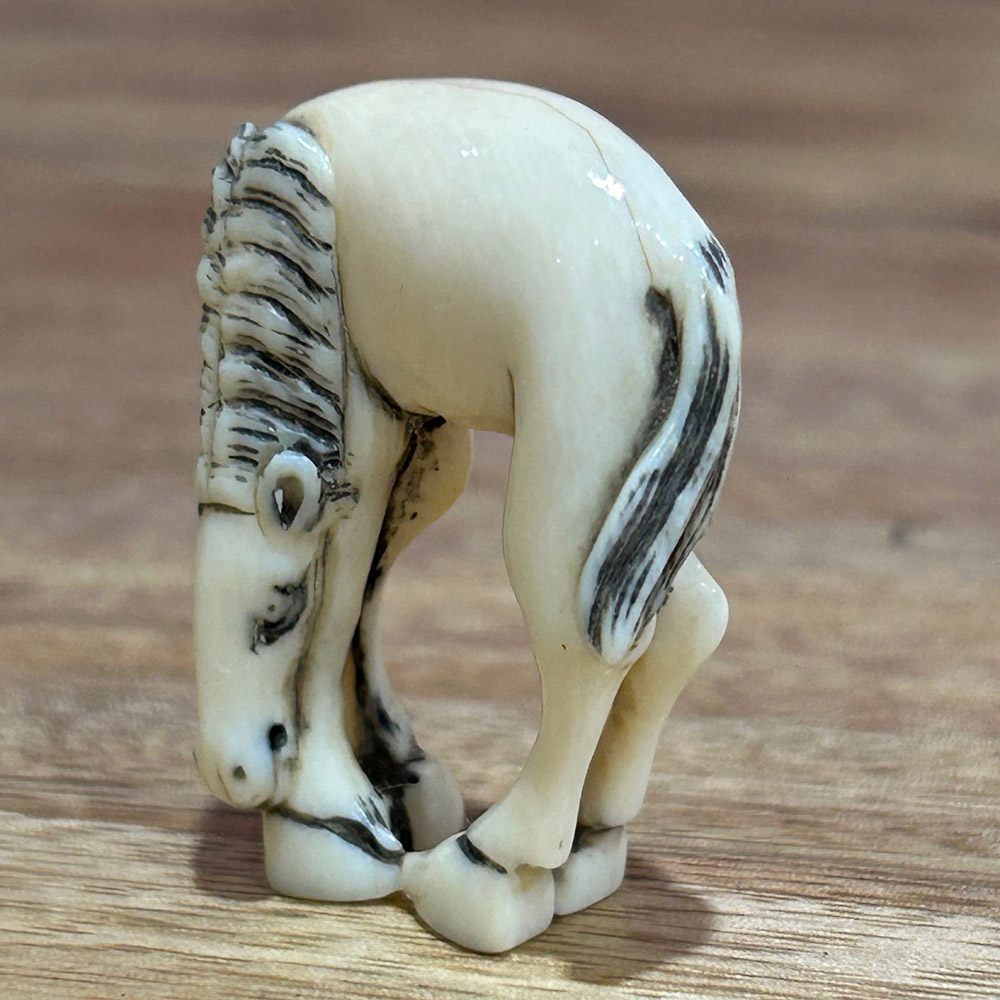
Judith M asked us: I’m hoping you might be able to give me an idea of the value of my ivory netsuke. After reading about the ivory rules in the Winter issue of AtoV, I’m wondering if they are still collectable? I have an ivory netsuke of a horse with a signature that I bought about eight years ago. It measures 40mm high x 30mm wide. Also a second ivory horse netsuke, this one with no signature and I bought 12 years ago, it measures 44mm high x 30mm wide. What age are they approx., and would they have any value today given the ivory market, if they were sold in Australia? They are both in excellent condition.
David Freeman says: These appear to be Japanese netsuke from the Meiji period (c.1868–1912), finely carved and one potentially bearing a signature, which can add to its collectability. Traditionally, netsukes were used as toggles attached to clothing to secure small personal items.
Japanese Meiji-period ivory netsuke continue to be sought after by dedicated collectors of ivory okimono and netsuke in Australia and overseas. However, regulations governing the sale and ownership of ivory vary significantly between countries. The United Kingdom has implemented a near-total ban on ivory sales, while within the European Union, the sale of pre-1947 ivory may be permitted subject to specific requirements and permits. In the United States, certain categories of antique ivory can still be bought and sold, although exemptions and regulatory compliance may be necessary.
In Australia, the import and export of ivory have been strictly regulated since 1990 and generally require appropriate international permits. Some Australian auction houses continue to offer vintage and antique ivory for sale, provided it complies with applicable legislation. Major online marketplaces, including eBay, Facebook Marketplace, and Etsy, prohibit the listing and sale of ivory items. As a result of these restrictions, Australian auction houses that sell antique ivory generally limit participation to Australian bidders. Based on current market conditions, comparable netsuke may achieve approximately $150–$200 each at auction, depending on quality, condition, subject matter, craftsmanship, provenance and the presence of a signature. In my opinion, regulations surrounding ivory are likely to become increasingly restrictive over time, and Australia may eventually move toward a complete prohibition on the sale of both antique and vintage ivory.
Assessments by David Freeman from Amanda Addams Auctions in Melbourne.
Want to read more? You need the current Spring 2026 issue of Antiques to Vintage magazine. Click here to find out more.