But there are many other, more practical uses for gold leaf. It’s just that if you take one of the courses at the Art Gilding Academy in Sydney, eating a gold-leaf covered Tim Tam is a delightful added extra.
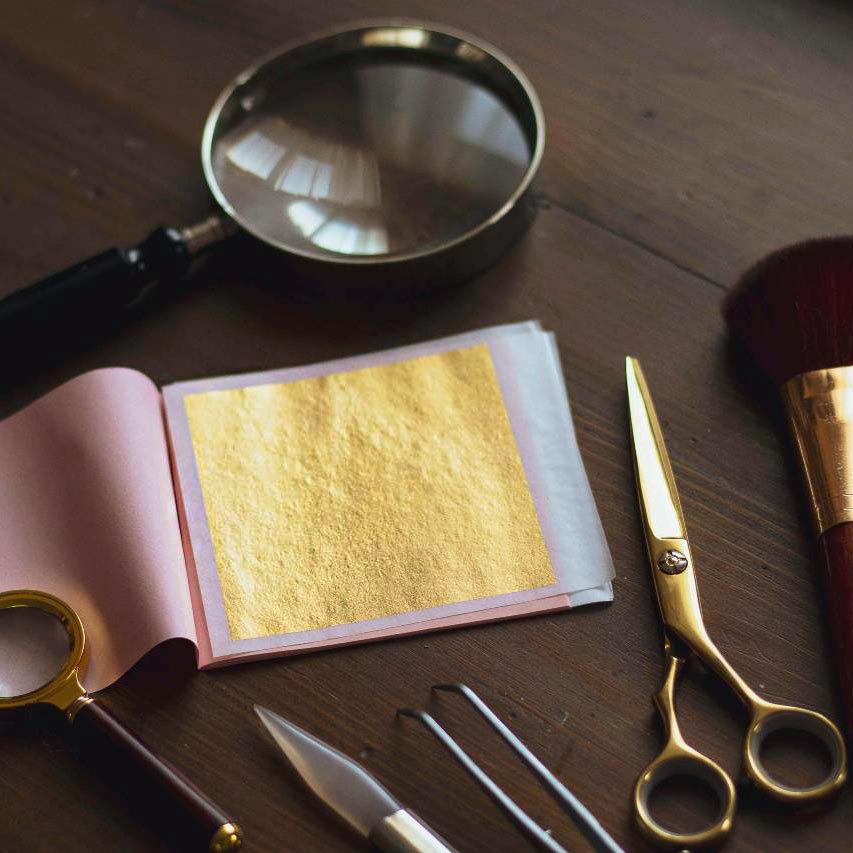
Gold leaf is real gold, it’s just been beaten into a very, very, very thin sheet that averages about 0.12 microns in thickness. To give you a better idea: the paper you use in the photocopier is 130 microns thick. And if you touch gold leaf with your finger, it will practically disappear, leaving behind a slight sheen. It can be used to decorate just about any surface and pure gold leaf will not tarnish over time.
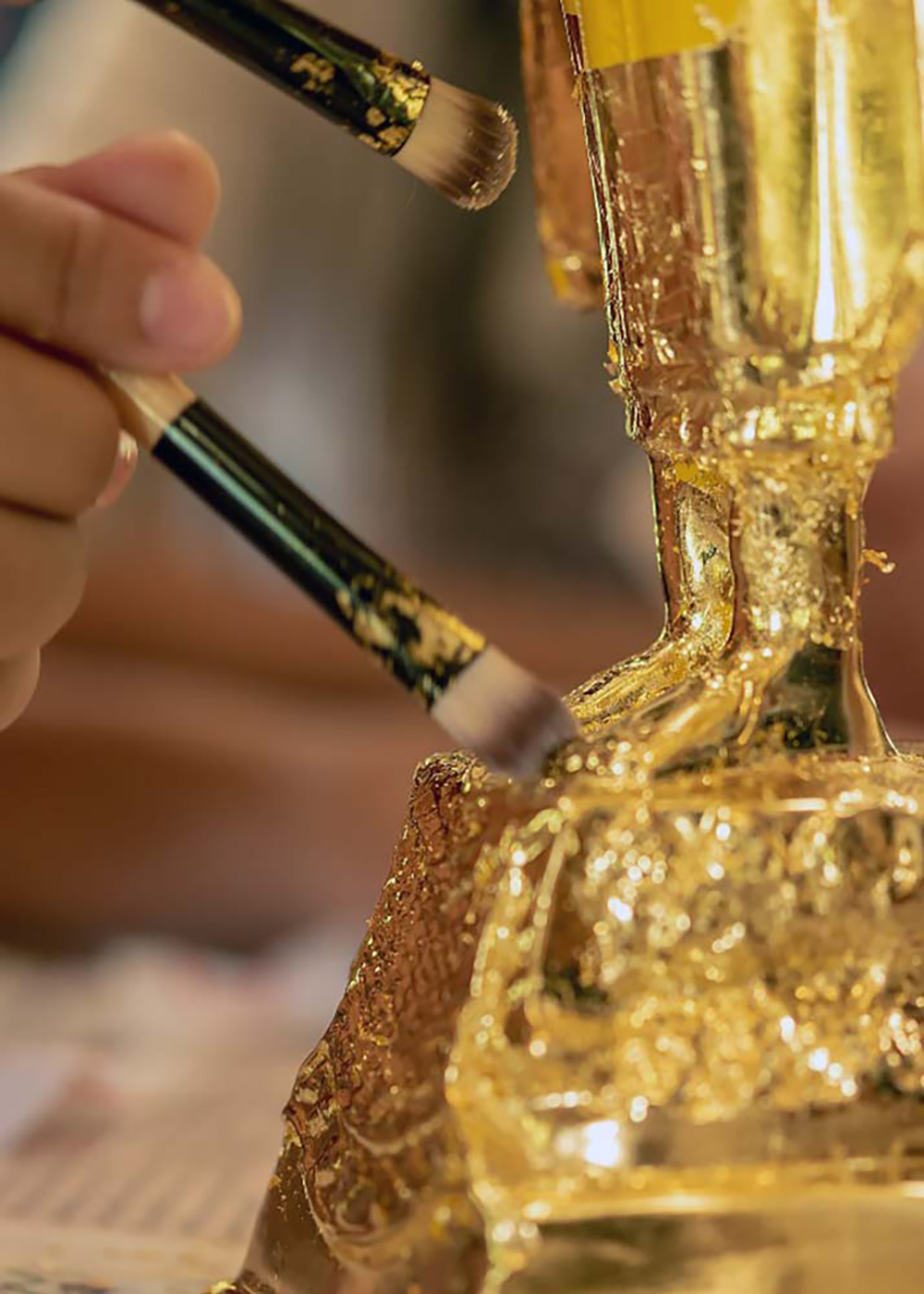
The actual process of gilding involves the application of very thin layers of metals for the general purpose of decoration. Established approximately 8000 years ago, it has been widely used by civilisations and societies around the world.
Gilding is a skilled craft, and in the hands of a master craftsman provides not only a highly decorative finish that can highlight intricate details, but also when used on a larger scale – and we’re talking very large – bring life to whole buildings.
We’re not suggesting that you go out and start gilding your neighbourhood, but if you like the idea of adding some bling to a project or two, you can learn the art for yourself by doing a weekend course. The Art Gilding Academy runs monthly weekend classes alongside its Master Gilding Course, and once you know what to do you can take home some supplies and practise gold leafing at home. Picture frames, clocks, statues… gold leaf can be applied to almost any clean, dry surface including jewellery and artwork. No previous experience or skill is necessary and when your weekend class is completed you’ll be going home with a beautifully gilded Egyptian plaque that you’ve decorated yourself. And don’t forget those golden Tim Tams…
Find out more about the Weekend Gilding Class here:
www.artgilding.com.au/the-art-gilding-academy/weekend-gilding-class