It does seem a little bit cumbersome: a breadboard is lot bigger and heavier than a greeting card! But as Madeleine Neave from the Antique Breadboard Museum in London tells us, centuries ago breadboards were often given at weddings and birthdays, as holiday souvenirs, or even to mark professional milestones.
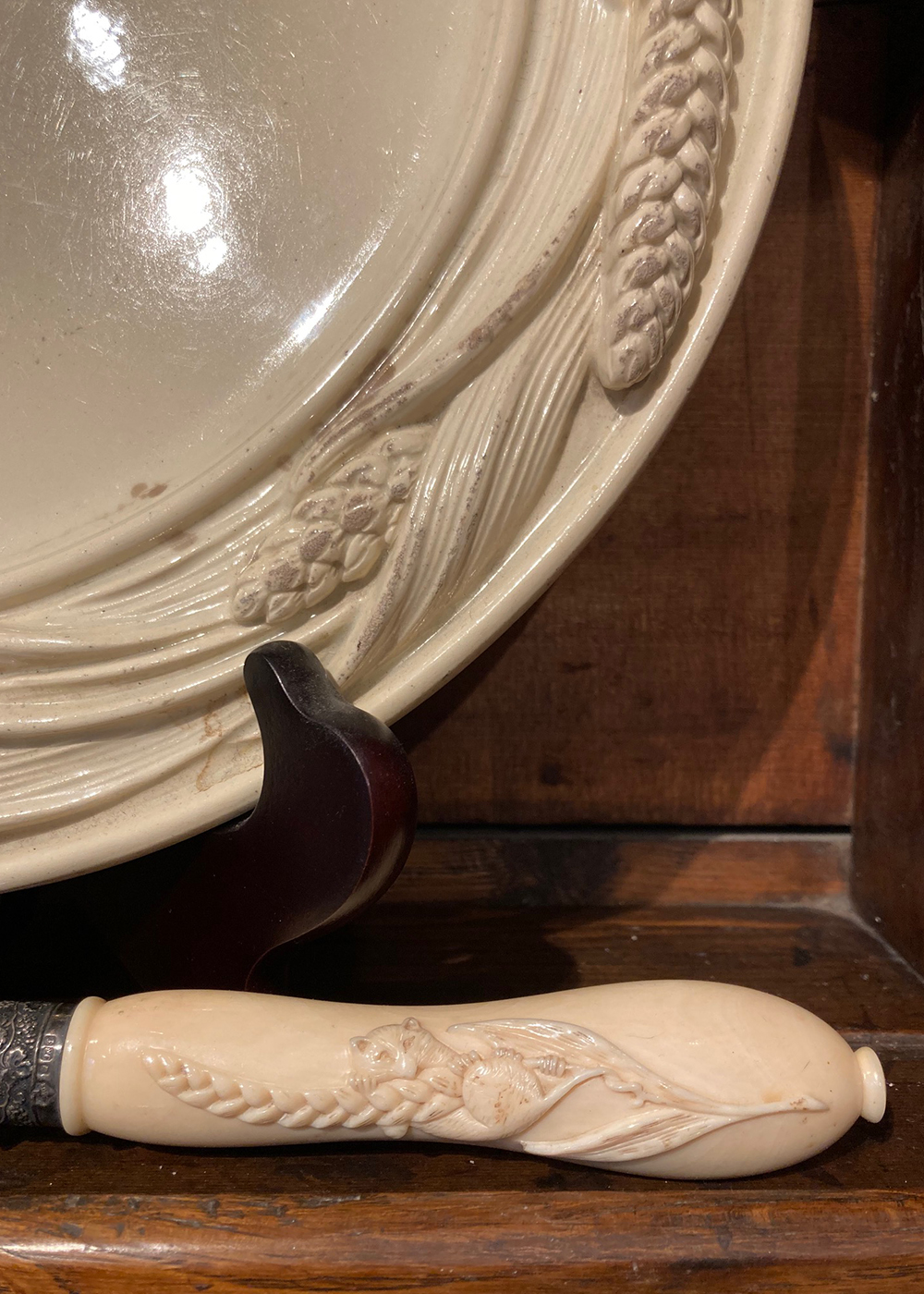
The first mentions in print of breadboards date from 1848, in the Illustrated London News and Art Union Journal. They were called ‘bread platters’, inspired from Medieval banqueting platters, and were designed as serving trays for pre- sliced bread and rolls. A platter design has a central depression, and a raised border.
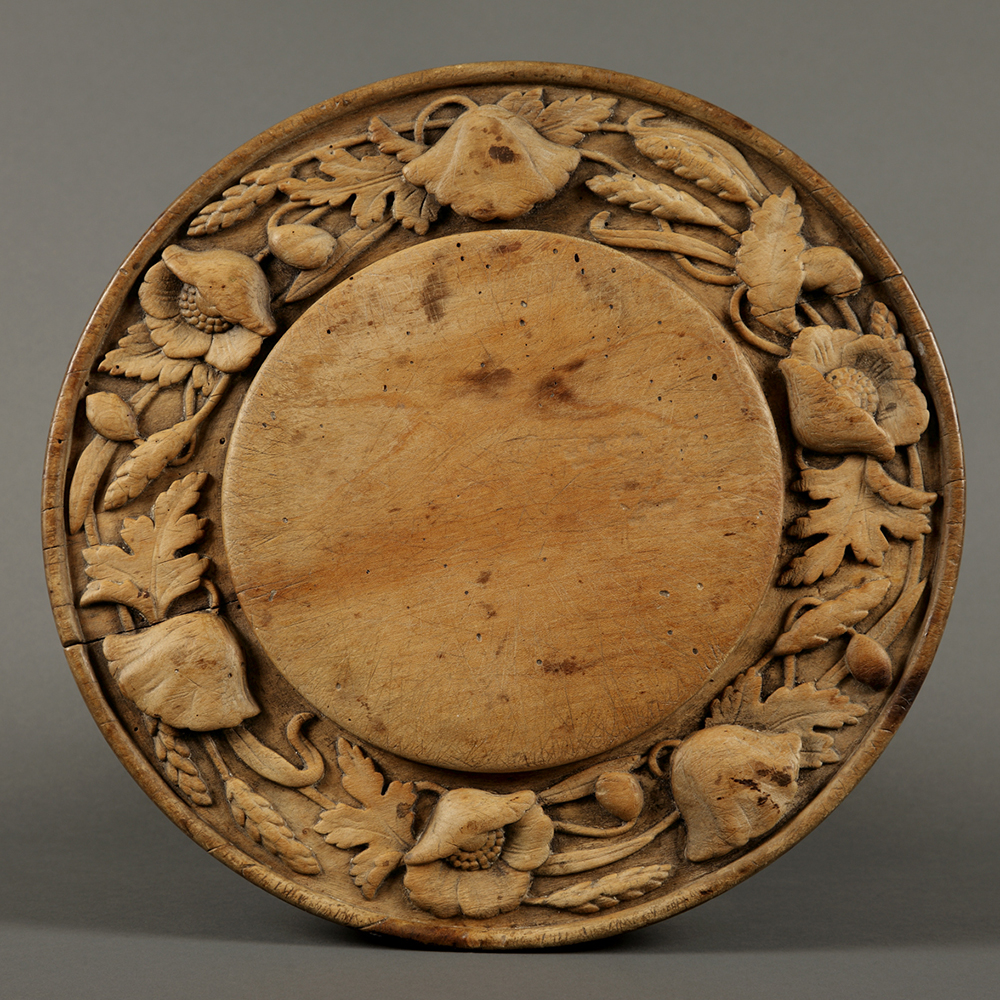
When people started to cut directly on their bread platters, damaging the carving, the wood artists adapted the design; they raised the central roundel and lowered the decorative border, thus protecting the carving. This was the birth of the quintessential British breadboard, the inverse of a European sharing platter.
Although many people were unable to afford bread after the Corns Laws were passed in 1814, setting trade tariffs on cheap imported wheat, the repeal in 1846 led to a crash in bread prices and cheap breadboards flooded the market. Everybody wanted one to celebrate bread’s new affordability. The company of George Wing in Sheffield did a spectacular trade in nothing but, producing a catalogue with 50 pages of wooden boards and accessories for all budgets.
Late Victorian breadboards sometimes had biblical phrases or joyful mottos such as ‘The Earth is the Lord’s’, ‘Be thankful’ or ‘Cut and come again’. By the 1900s the breadboard had become an essential item on the wedding gift list, alongside a matching bread knife.
To read more on the history of breadboards, grab a copy of the Autumn 2026 issue of Antiques to Vintage and get the whole story! (In newsagents now or subscribe today and have the magazine delivered direct to you).