The concept of the travelling salesperson isn’t new: people have been hawking their wares on the streets for centuries, selling small goods such as ribbons, threads, cottons, spices, tools and kitchen implements, especially in the country where residents might live a distance from a town or market.
Peddlers were first licensed in England in 1698. Required by law to carry appropriate credentials that included a letter of good character signed by a member of the clergy, they were starting to diminish in numbers by the 19th century, which is coincidentally when the peddler doll became popular.
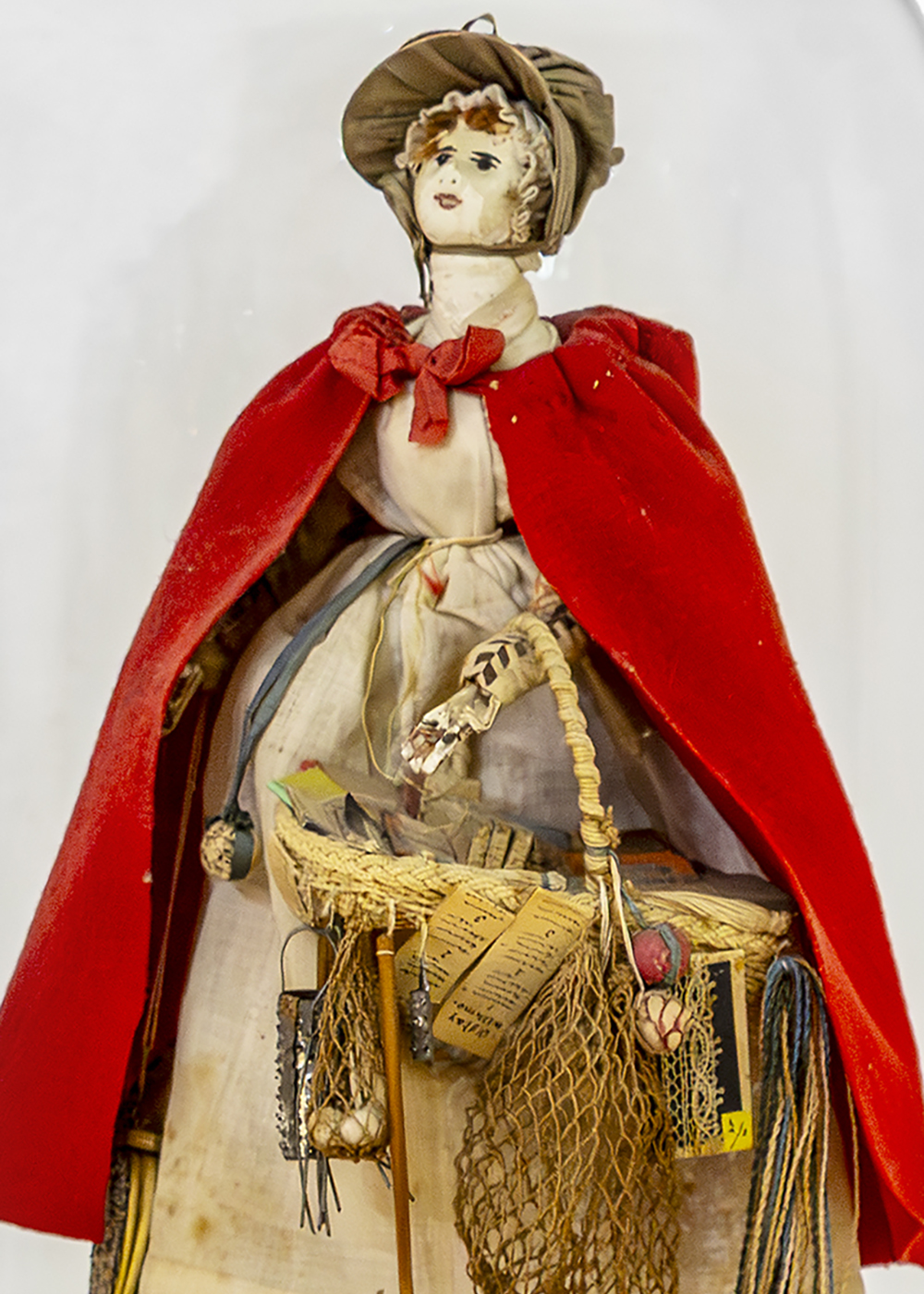
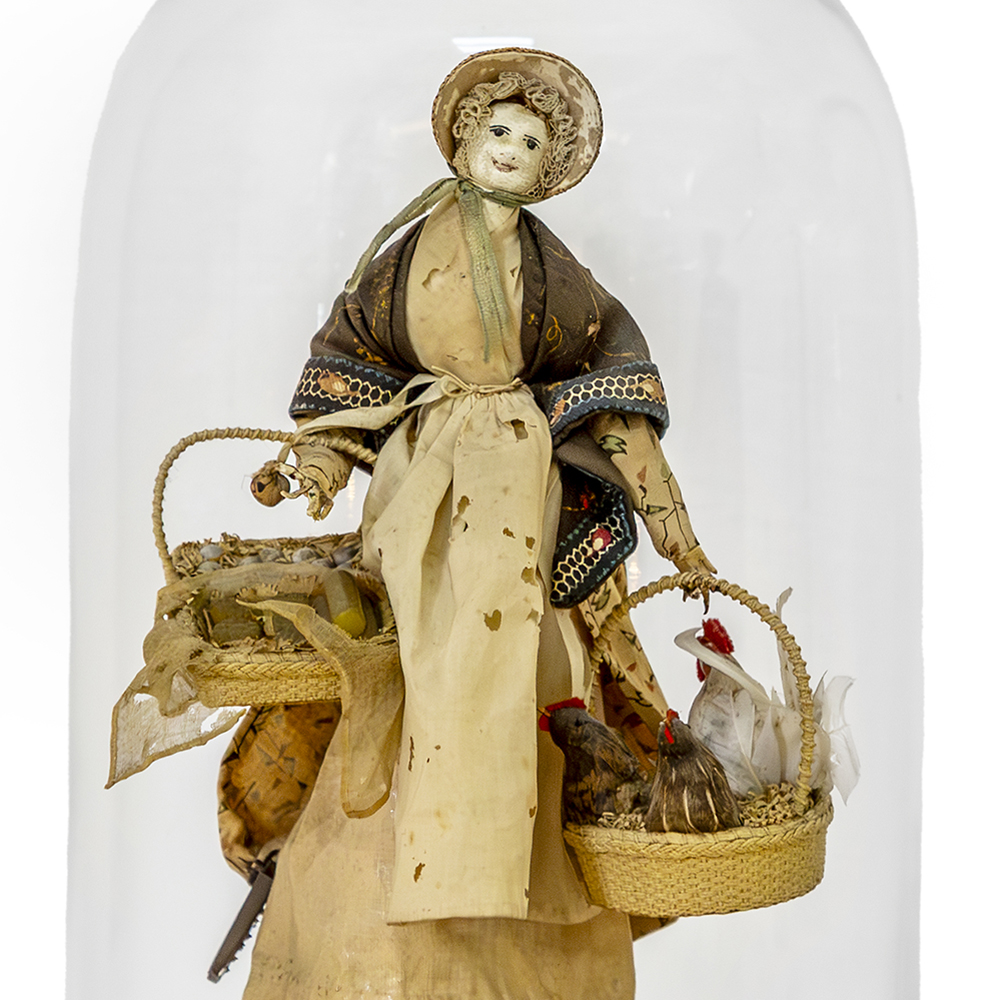
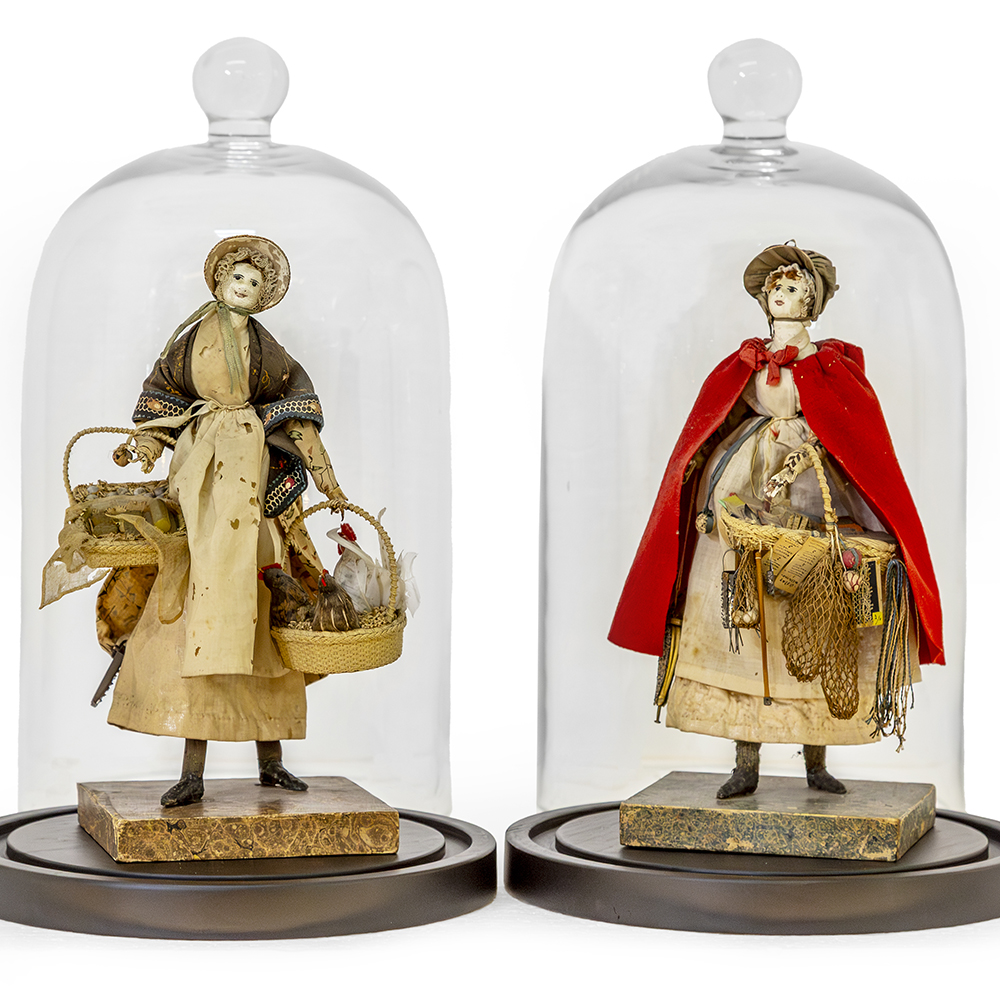
Peddler dolls were made of wood, papier mache, leather or china in both female and male figures, each dressed with the familiar red cloak and black bonnet, and carrying an array of miniature pots, pans, books, buttons, stockings and other goods. Many peddler dolls of the 19th century were made by Victorian ladies who whiled away their time by crafting sometimes hundreds of tiny buttons, fabrics, laces, ribbons, pots and pans that the peddler offered for sale, and were displayed on large trays hung from a strap around the neck of the doll, in baskets on their arms, or in bins displayed at their feet. The dolls were curios rather than toys and were usually protected by a glass dome and displayed in the home.
The gorgeous peddler dolls pictured here are from Deco Heaven in Tyabb, Victoria. They date from the 19th century and were made by C.H. White of Portsmouth, who was one of the commercial operators who created a series of the dolls in the early 1800s.
——-
Antiques to Vintage magazine is researched, written and designed by humans, in Australia for Australian collectors.