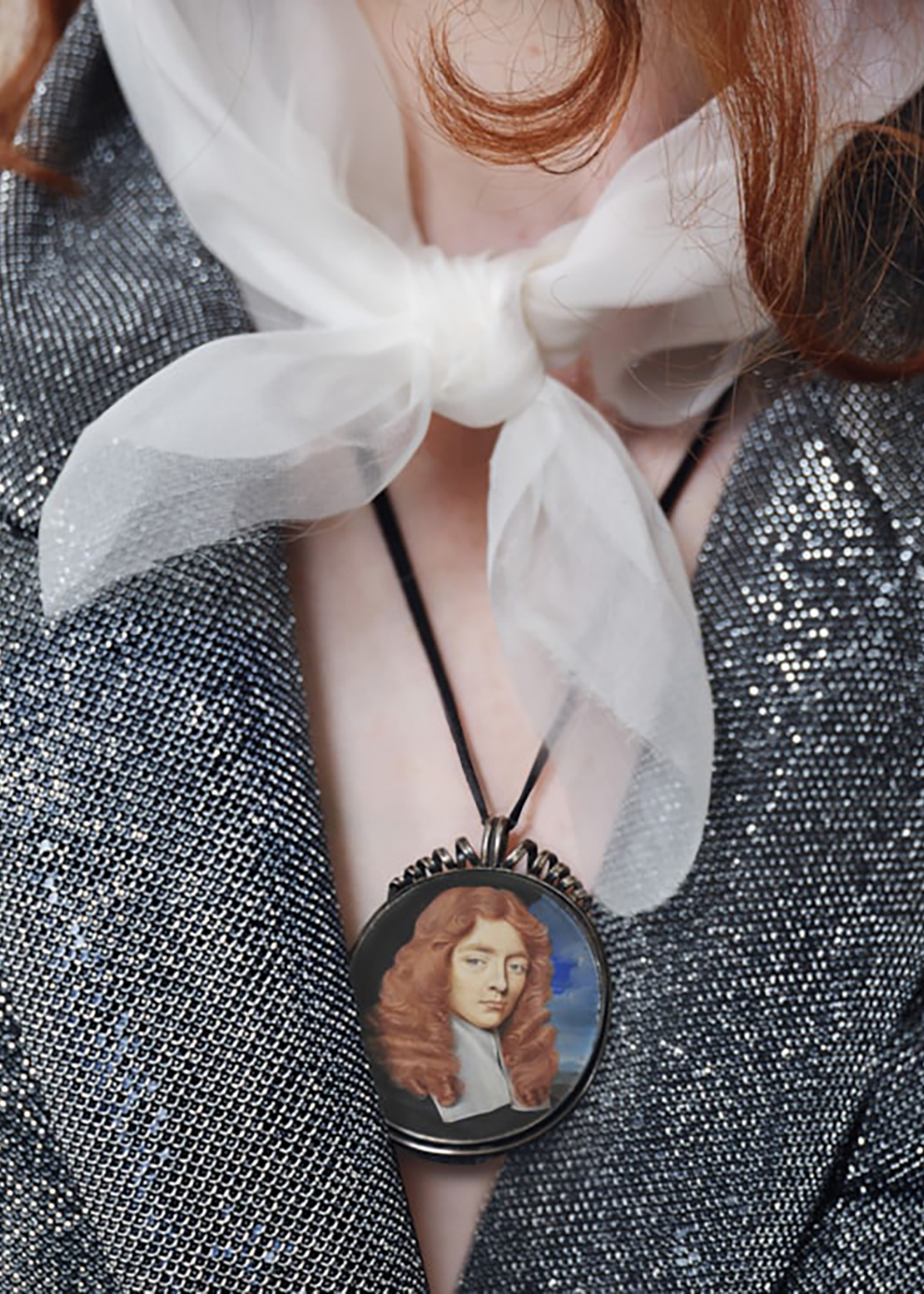
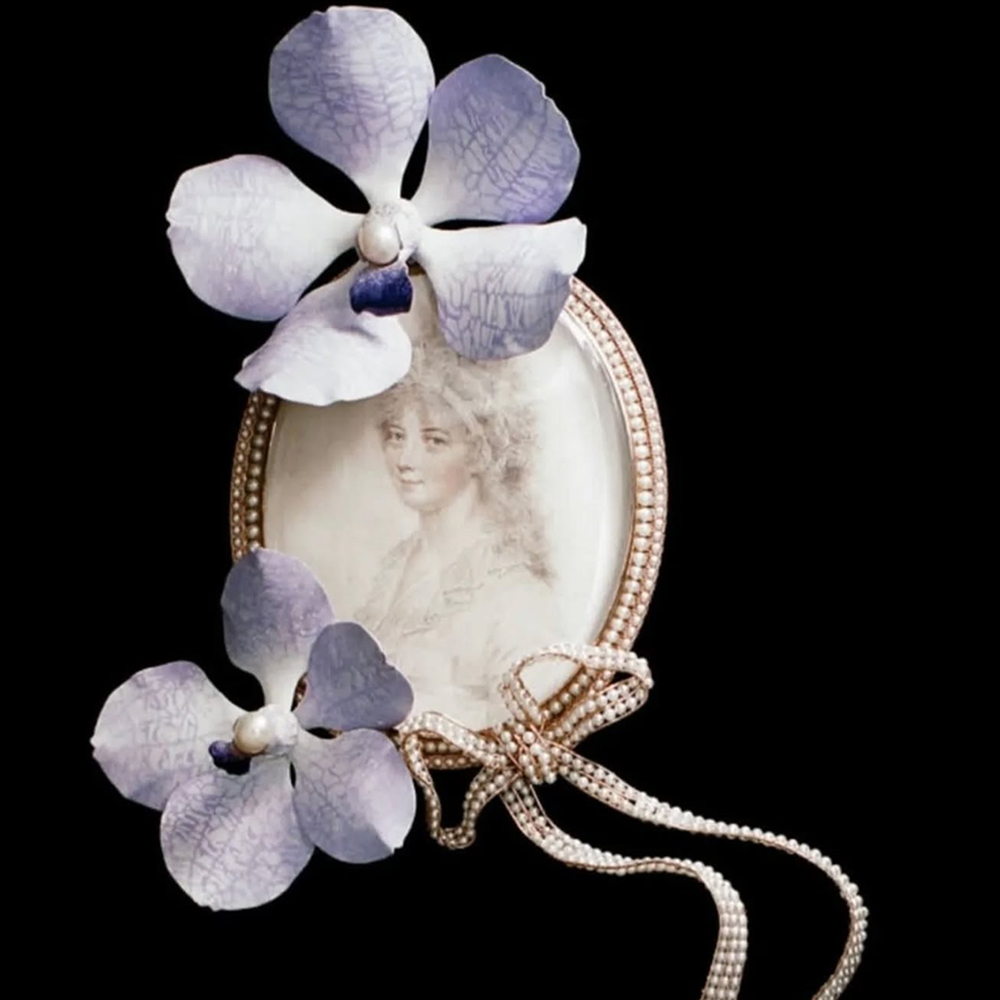
In a fusion of centuries-old art and contemporary high fashion, the late January Paris runway show for Christian Dior featured antique portrait miniatures along with gorgeous frocks.
It was the brainchild of Dior’s new creative director Jonathan Anderson, who sourced the miniatures from The Limner Company, whose miniature portraits also feature in the upcoming Autumn 2026 issue of Antiques to Vintage.
Emma Rutherford, who is director of The Limner Company, had a front row seat at the show and said, “Today’s Dior show has been a career highlight… to see portrait miniatures once again as wearable art.” Anderson explained his choice for his first Dior couture show by saying, “Once again, I looked to the past to shape the future, this time with a greater sense of playfulness and the unexpected.”
Miniatures were usually commissioned by the sitter of the portrait with an intended recipient in mind; sometimes they depicted just the eye of the beloved, so the recipient could wear the miniature openly without giving away the identity of the sitter. They were also worn outwardly for diplomatic reasons, to show allegiance to a sovereign.
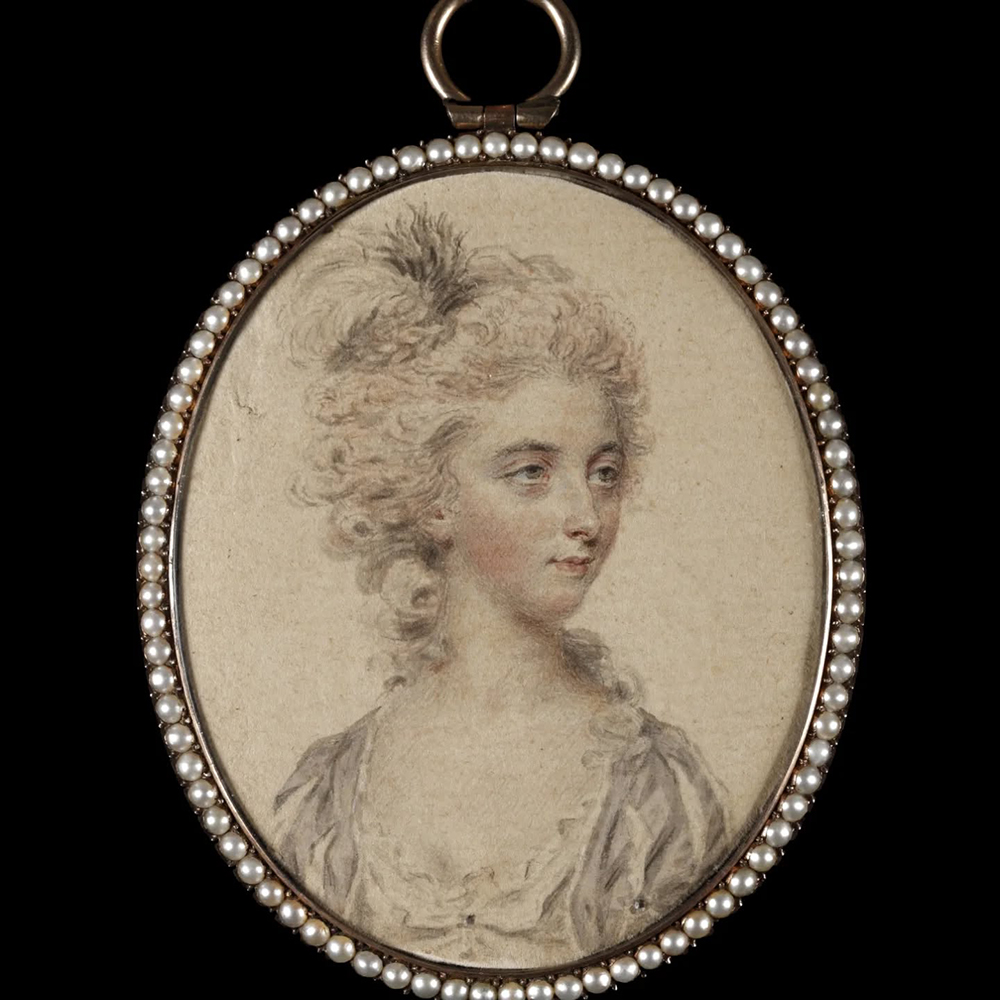
Two of the portrait miniature drawings featured in the Christian Dior show were painted by John Smart (1741-1811) and depict Mrs Shippey of Sloane Street and Mrs Parker of Bath, the former drawn in 1784 and the latter in 1797. “These drawings are prime examples of Smart’s understanding of fashion and his client’s wishes to be portrayed in the trendiest styles of the moment,” says Emma Rutherford. “John Smart was one of the best miniature painters of his time and he drew and painted some of the most important members of Georgian society. His ability to capture the textures of fabrics and hair on this scale was almost unmatched in Georgian Britain. It is perhaps not surprising that he was able to render hair so well, as Smart’s father was a peruke (wig) maker, and he would have grown up surrounded by these accessories, which were worn widely by eighteenth-century women.”
The two portraits were painted more than ten years apart and this time lapse also provides some insight into the changing fashions of the late 18th century; Mrs Shippey’s 1784 dress features a more rounded neckline, but by the time Mrs Parker was painted in 1797 the fashion had shifted to a V-neck.
You can read more about miniature portraits and those of Isaac Oliver – whose work was ‘inferior to none in Christendom for the countenance in small’ – in our feature in the Autumn 2026 issue of Antiques to Vintage.
Images and reference: facebook.com/portraitminiature
portraitminiature.com