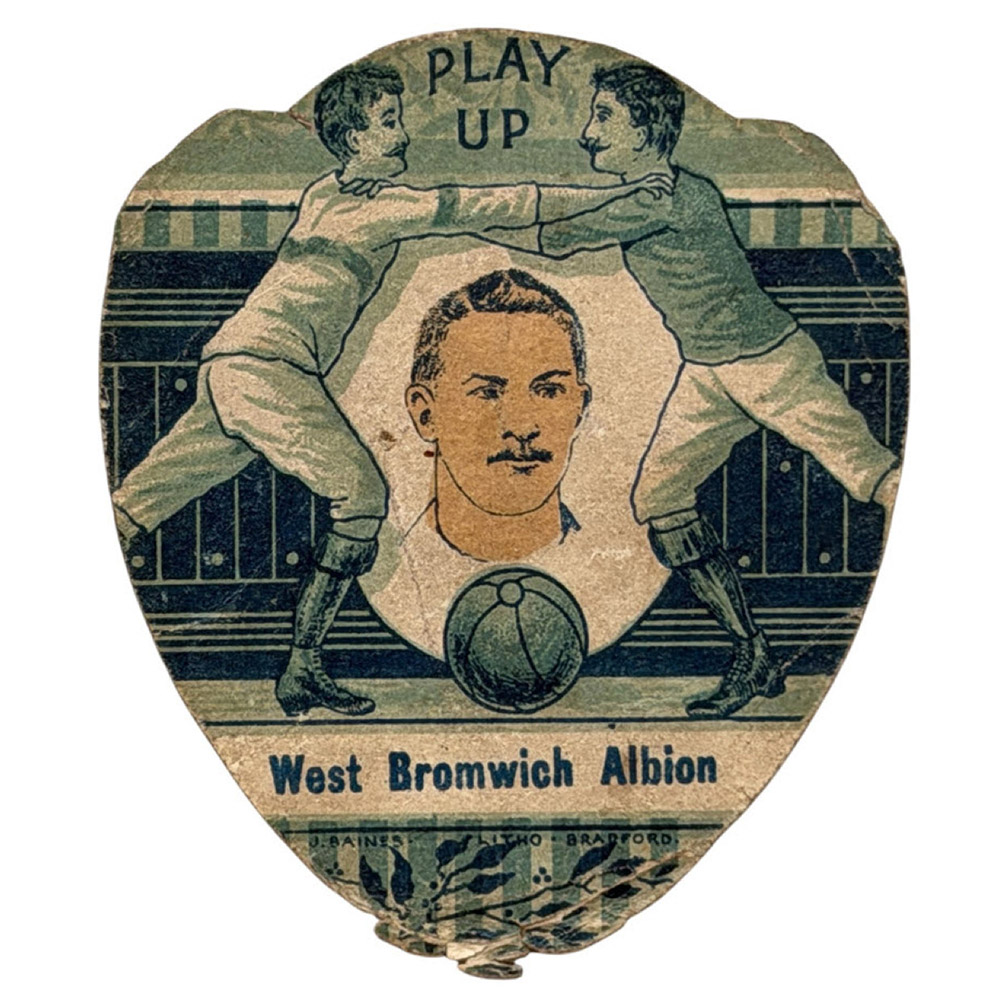
Put it down to World Cup fever, or maybe just someone really keen to own a football trade card of William ‘Billy’ Bassett… the result is the same: a late Victorian trade card estimated to sell for around $70 that was bid to $3425 (including buyer’s premium) at Sportingold in the UK.
Billy Bassett is one of British football’s earliest household names. Between 1886 and 1899 he made 261 League appearances for West Bromwich Albion and scored 61 goals playing outside-right, with two FA Cup wins. He played for England 16 times between 1888 and 1896, scoring eight goals for king and country. He was a slight man; at just 5ft 5in tall, he was considered ‘too frail’ to pursue a professional football career when he was a teenager. But there was nothing frail about Bassett, who on April 28, 1894 won the distinction of being the first Albion player ever to be sent from the field for ‘unparliamentary language’. He was Albion’s chairman for 29 years after he retired from playing the game, and when he died in April 1937 it was reported that more than 100,000 people turned out for his funeral procession.
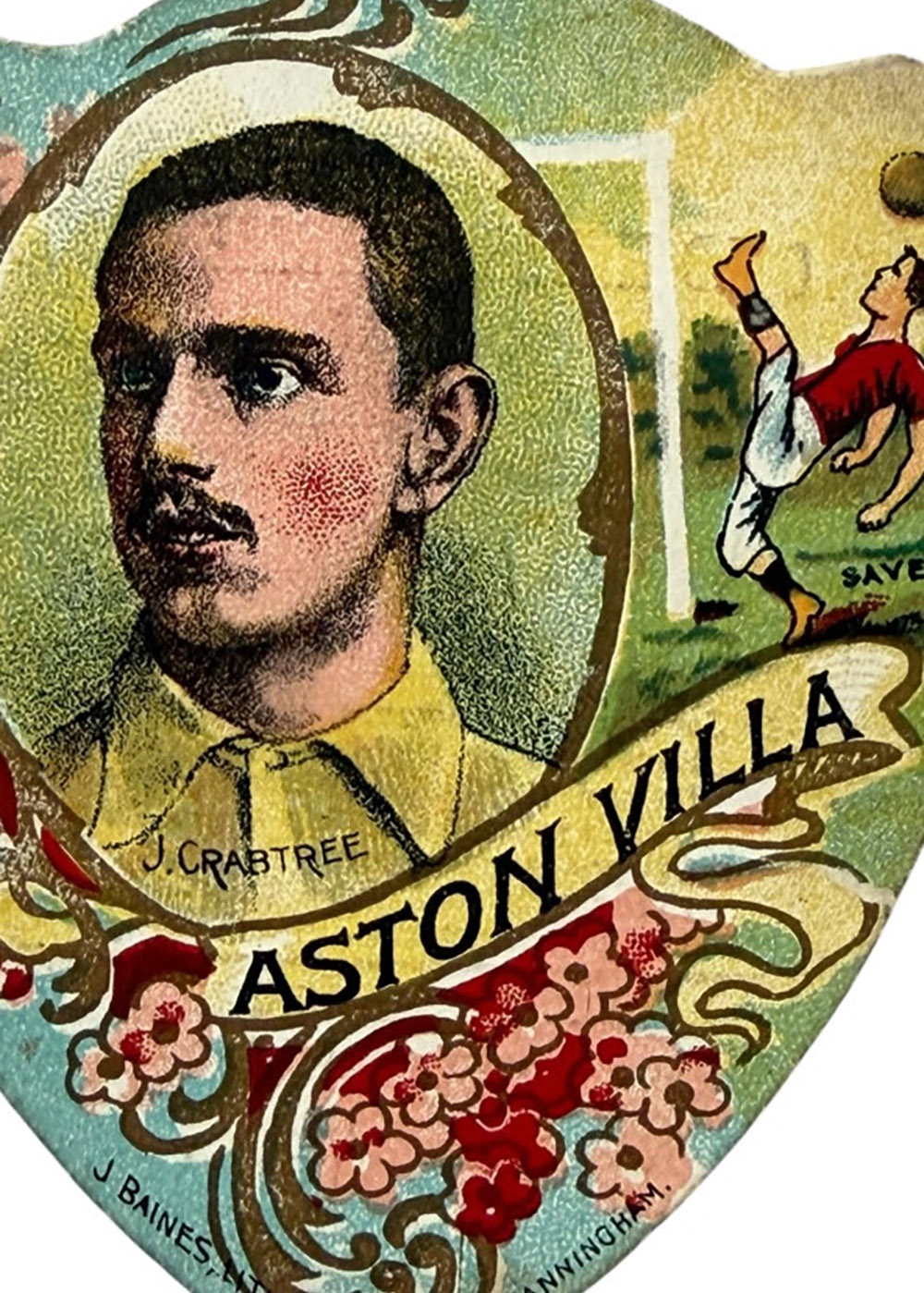
At the same auction, another Baines card made even more than Billy Bassett’s: Jimmy Crabtree, who played for Burnley before joining Aston Villa in 1895, was bid to $5200 including buyer’s premium. Playing as either full back or half back, Crabtree won four League Championships with Aston Villa, as well as an FA Cup and two Charity Shields. He was the winning goal-scorer in the 1897 FA Cup final against Everton and he played for England 14 times.
The cards depicting these legends of British football were produced by retailer John Baines of Bradford, England, who from the late 1880s published sets of sporting cards to sell to schoolboys at a set of 12 for a penny or a halfpenny for 6. The ‘blind’ packets were called Lucky Bags.
Inspired by the success of the American baseball cards that had steadily gathered popularity since they were introduced in the 1860s, in 1887 John Baines filed a patent describing ‘a new means or method of illustrating the play and players of football’. Employing designers and etchers to produce the designs that he then had printed locally, his colourful football cards were cut into the shape of a shield and featured depictions of teams and their kits as well as sketches of popular players.
Baines’ football card sets featured teams, players and club crests for everyone from the elite professional clubs right down to the local school teams. He branched out into rugby and cricket cards and further expanded into a myriad of different sports, from golf and horse racing to bowls and tennis. His football card output numbered hundreds of thousands each year; no surprise then that he became known as the Football Card King.
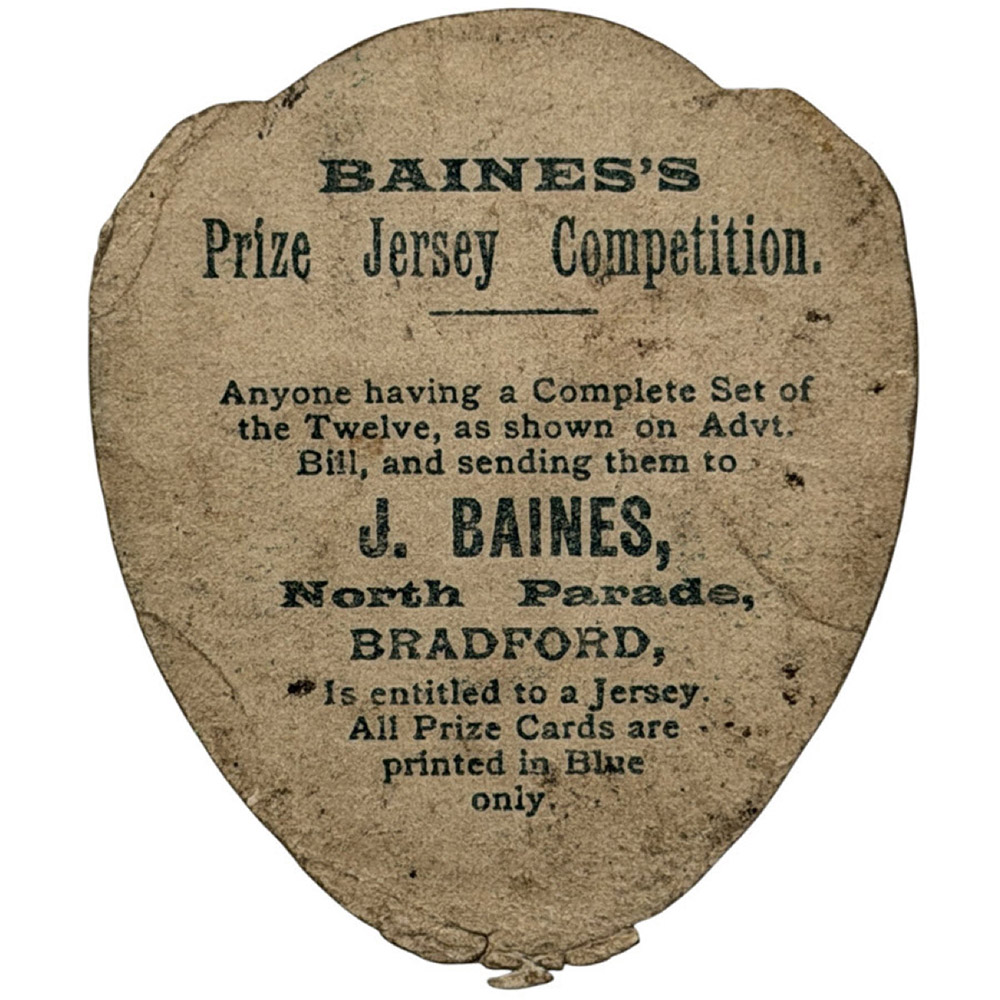
The football cards were promoted via various competitions. Prizes could be won by finding special ‘medal cards’, or by collecting empty packets, or even by writing mini essays, with the winning entries then being printed on the back of other cards.
The Bassett card was part of a prize jersey competition launched by Baines, who offered a football jersey to whoever could collect a specific list of cards that would be promoted on posters in shop windows. Some of the cards listed were especially difficult to find and boys would travel miles to neighbouring districts when they heard rumours of an elusive card being found.
In 1888 a disgruntled customer of Bradford grocer Steve Binns lodged a court complaint that the football card promotions he had bought from Binns were in fact lottery coupons, stating ‘certain prize packets, they being lotteries not authorised by Acts of Parliament’ and therefore making the cards illegal. There was, according to the magistrates, ‘not the ghost of a case’ and the charges were dismissed. Baines cards continued to be made until the mid-1920s, with the later examples often being printed on quality thick card stock as opposed to the original early cards, which were printed on thin paper.